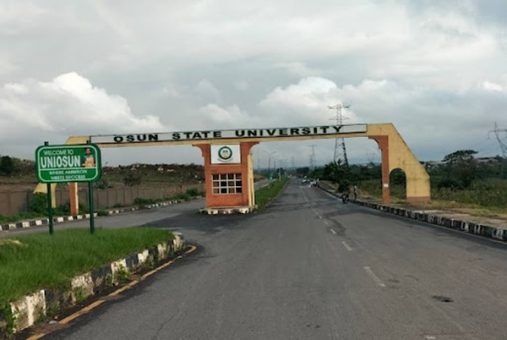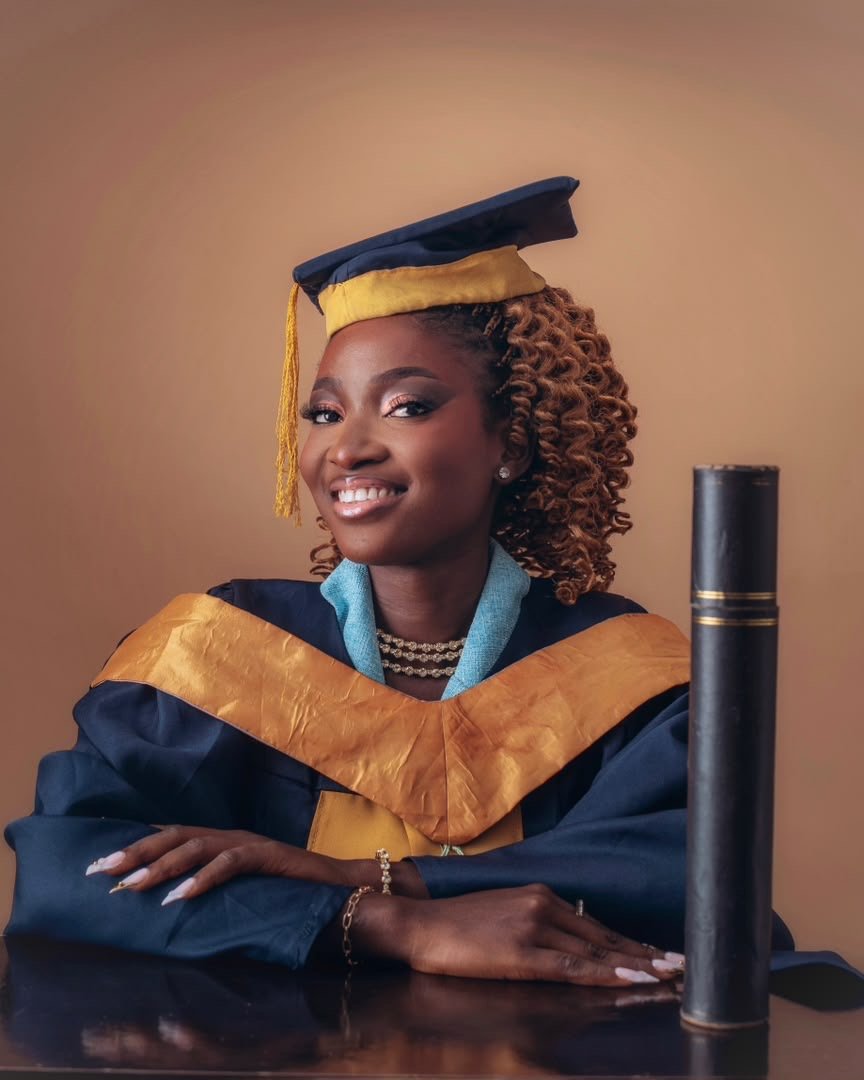
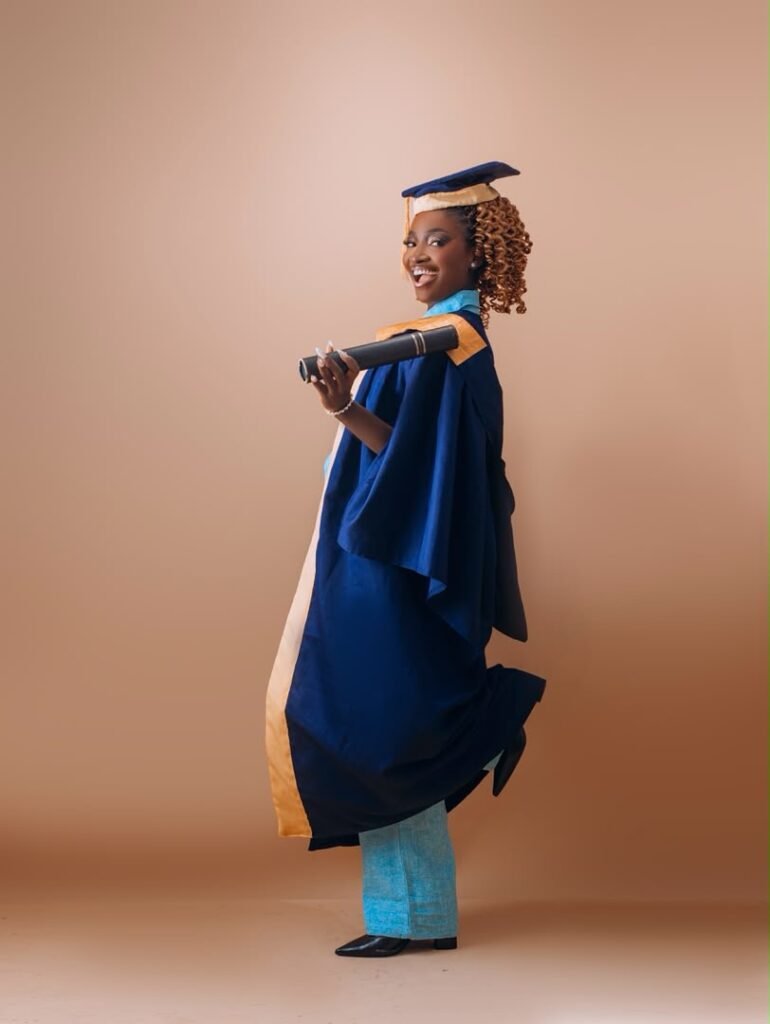
Rotimi Oluwapelumi Emmanuella, a graduate of the Department of English and International Studies at Osun State University, has emerged as the best graduating student in her department for the 2025/2026 academic session, graduating with a First Class degree and a Cumulative Grade Point Average of 4.56 out of 5.00.
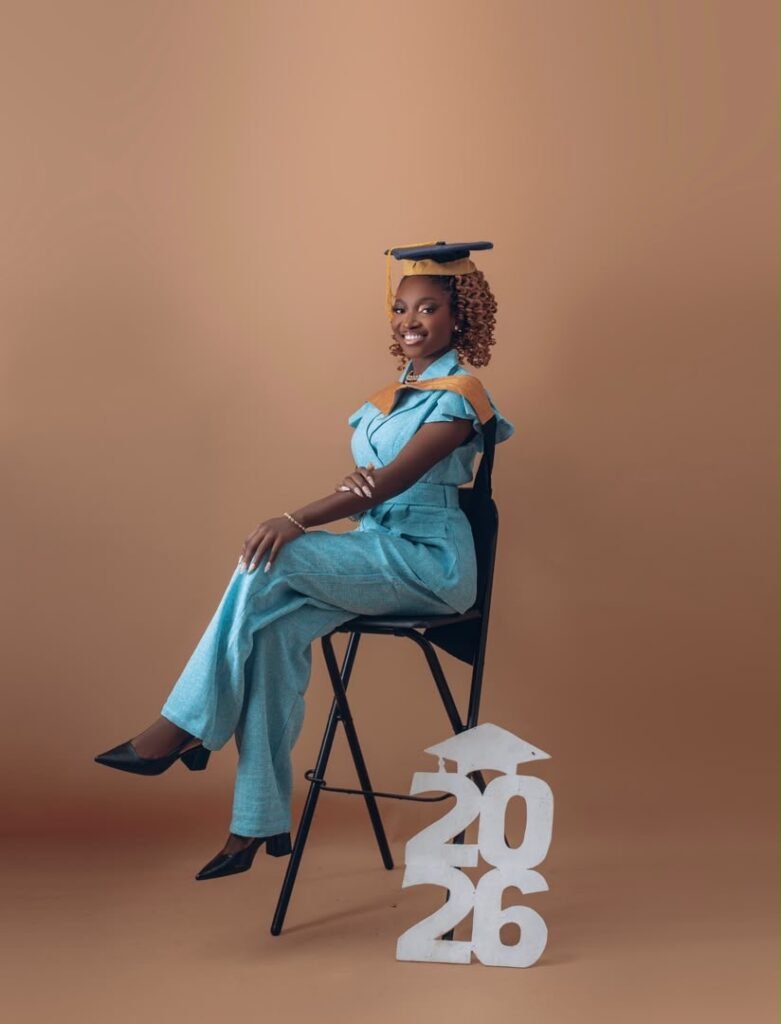
Hailing from Akoko South West Local Government Area of Ondo State, Emmanuella is the last of five daughters. She lost her father to cancer in 2015 and was raised alongside her sisters by her mother. A photographer, poet and essayist, she speaks with ABISOLA ADIGUN about her academic journey, family support, financial struggles, study habits and the importance of overcoming self-doubt.
Congratulations on graduating with First Class Honours from Osun State University and emerging as the best graduating student of English and International Studies in the 2025/2026 academic session, with a CGPA of 4.56. How did you receive the news, and what did the achievement mean to you personally?
Thank you. My level adviser, Dr Olaniyan, had always encouraged me and told me I could do it. So, when our results were released, even though I hadn’t checked mine yet, she was the first person to reach out and congratulate me.
“ You made it,” she said.
I just knew, and it made me really happy, even though I still didn’t know what CGPA I had graduated with. It wasn’t until I checked the portal that I saw the number — 4.56.
The achievement means a lot to me, considering how much time I had spent at home before I eventually gained admission. I had never once aspired to First Class, either while pursuing admission or after I eventually gained it.
Since I was no longer on First Class, I still did my part as a student, but I wasn’t chasing it anymore, especially with the notion that 100 Level and 200 Level determine a person’s eventual CGPA.
After our final exams in 300 Level, we had a meeting with our supervisor, Prof. Rotimi Fasan, and he asked for our CGPA. I told him I was on 4.48. He was really impressed and told me that if I tried harder, I could still make First Class.
Although I had thought about it before, that conversation really made it resonate with me, so much that I was determined that whatever the outcome of my results that semester, I was going to try harder in 400 Level.
When my results came out for 300 Level, my CGPA was 4.50, and that was the push I needed. I was determined it wouldn’t go below that.
You are from Akoko South West in Ondo State and grew up in a family of six as the last of five daughters. What was your childhood like, and what values from your family have influenced the person you have become today?
My mum and sisters are my life. I am the last child, so I was treated like the baby. I’m still treated like a baby. My sisters still hold my hands when we cross the road.
My family has always been supportive, and that support is what makes me who I am. There has never really been pressure. Maybe sometimes they try to impose their views because they’re older, but eventually, they just listen and support me.
You lost your father in 2015, when you were still relatively young. How did losing him affect you and your family, and did that experience influence your determination to succeed academically?
I was in JSS 3 when I lost my dad. Maybe young, but not too young. He had cancer, so he was sick for a long time before we eventually lost him.
My dad loved education. As kids, we usually had lesson teachers take us after school hours. He would have been so proud of this achievement.
Losing my father meant losing the major breadwinner and placing more responsibility on my mum. Knowing how much she strives to pay my fees keeps me in check. I never want to disappoint her.
As the last child in a family of five girls, what role did your mother and sisters play in supporting you throughout your education, particularly during your university years?
They did everything! Everything!
Monetary, emotional, spiritual, moral — all kinds of support.
Why did you choose to study English and International Studies at Osun State University? Was it a course you had always wanted to study, or did your interest develop along the way?
I’ve always wanted to study English and Literary Studies, out of love for literature.
Osun State University, at the time, offered English and International Studies, which I think was a plus because I got to study English, literature and international relations.
What would you say was the biggest challenge you faced during your undergraduate years, academically or personally, and how did you overcome it? Were there moments you felt discouraged, and what helped you push through?
The biggest challenge has always been finances — rent, buying this, buying that, printing, paying for group work, not to talk of feeding and other expenses.
Someone recommended me for a scholarship at Temvert Empowerment Foundation in 300 Level, first semester, which I got, and they paid my fees that semester. It was one of those periods when I didn’t know how my fees would be sorted.
In my 400 Level, first semester, my phone spoilt, and there was no money to fix or replace it. I was without a phone for more than a month, with no access to class information and all that.
It was one of those moments when I was really tested. A week before my exams, I still didn’t have a phone. It was on a Thursday, just days before my exams on Monday, that I was finally able to get it fixed.
God is good.
I believe in God. I know He loves me, and He won’t leave me stranded. He has never disappointed me.
I also don’t like to panic when things go wrong. I just try to find possible solutions, and this habit has helped me overcome quite a number of things.
I like to rant only after my problems have been solved.
First Class students often have particular habits or routines that help them stay consistent. What did your approach to studying look like, and were there any specific strategies that helped you maintain your grades?
Studying, to me, is understanding.
Once I understand something, then there is no problem. All I need to do is understand what I am reading or trying to read.
I also attend classes consistently. Listening to people talk about a concept makes it stick better than just reading.
Whenever some courses feel too difficult, I pray and take long walks. I walk a lot; it helps me stay sane.
And even when I don’t fully understand something, I try to teach it. In the process of teaching, it kind of just untangles itself.
Aside from studying, research and other academic work, what did you do to unwind? What hobbies or activities did you enjoy when you weren’t studying?
I love photography. I’m actually a photographer.
I freelance because I don’t have equipment yet, but yes, I love photography.
I write too. I write poetry, I’ve written a drama that’s unpublished, and one or two short stories that are also unpublished.
I also write essays on my Substack, just for fun.
Were you involved in any other activities or organisations during your time in school, such as fellowships, student associations, departmental activities, leadership roles or other extracurricular engagements?
I was the PRO in my fellowship, WCF — Winners Campus Fellowship — when I was in 200 Level.
In 400 Level, I was the General Secretary and Academic Coordinator.
I was also a member of the Litera community, a community of writers and readers in my department, and a member of the Cowrywise Ambassadors Programme under the Programmes and Initiatives team.
Before you graduated, when was the last time a student from your department or faculty graduated with a First Class degree?
That would be two years ago.
Before her, it had been a long, long time.
Looking back at your four years at the university, what was the biggest sacrifice you had to make to achieve a First Class, and was there anything you had to give up that you sometimes wished you could have enjoyed?
Honestly, I don’t think I really gave up anything to achieve a First Class.
Now that you have graduated with a First Class, what are your plans for the next stage of your life, and what would you say to young students who want similar results but may be struggling with self-doubt or the pressures of university life?
I’m open to opportunities that will launch me into something bigger.
The kind of role that stretches me with real range. Opportunities that test me, not work that simply occupies me.
A lot of the time, we determine the outcome before we even start, and that’s why a lot of people fail. If you think you will fail, you most likely will.
I know pressure is real, and there are forces beyond your control that make already difficult situations harder.
The trick is to do what you can control, and do it well. I believe the universe has a way of blessing you in return.
Pressure comes, but the biggest pressure is the one you place on yourself.
Be kind to yourself. Know what you want, and let it lead you.
Source: Nigerian Tribune